Tuesday, November 5, 2013

Blackland Prairie Grazingland Conservation Initiative Tour


Submitted by:

Matt Machacek
Grazingland Specialist
Blackland Prairie Grazing Lands Conservation Initiative
USDA-NRCS
4321 West Hwy. 22
Corsicana, TX 75110
Office: 903-874-5131 ext. 113
Cell: 903-257-6633


The Blackland Prairie Grazingland Conservation Initiative purpose is to provide direct technical assistance to privately owned grazingland, and conduct outreach on different topics. Some major topics include ranch profitability, sustainability, and opportunities to improve our soil and forage resources.  From time to time we work with innovative ranches to host field days with the purpose of helping local ranchers network and find different technology that might fit their operations.

I would like to invite you to our 2013 Fall Grazing Tour on November 19th in Sherman, TX.  This tour will be located on Watson Farms.  Watson Farms is a 450 acre ranch divided into many paddocks with electric fence.  Stocker cattle are grazed at high density  to improve the forage base and focused management is being used to grow more beef per acre while staying profitable. Craig Watson is certainly an innovator and he will explain his approach to ranching profitably. 

This tour is scheduled from 9:30 to 12:00 and it is open to the general public.

Friday, October 18, 2013

New Apps available for Pond Management.


The Texas A&M AgriLife Extension Wildlife and Fisheries Department has recently developed apps for use by producers. These apps are now available in the iTunes store for iPhone, iPad, iPad Mini, iPod Touch, MAC, & PC. We invite you to check them out.

http://a1.mzstatic.com/us/r30/Purple4/v4/56/f4/d3/56f4d35e-effe-4098-d106-69ce3294f15b/icon170x170.png AquaCide – $2.99

The Aquatic herbicide selection, effectiveness, and restriction guide is a tool for recreational pond managers as well as aquaculture professionals. This comprehensive visual guide helps you select the most effective herbicides for all aquatic vegetation classes, including the most common North American algae and floating, submerged, and emergent aquatic vegetation. Only herbicides that provide good or excellent control are provided for each species. AquaCide provides the environmental restrictions of all aquatically labeled herbicides, such as restrictions for human use (drinking, swimming, and fish consumption), livestock watering, irrigation (turf and crops), and other general comments pertaining to restrictions and differences in formulation.

Keywords: AquaCide, herbicide, pond management, aquaculture

http://a4.mzstatic.com/us/r30/Purple/v4/a1/f1/6d/a1f16dfe-2d60-b688-8e3d-7e9497bc2d2b/icon170x170.png  AmmoniaCalc - $1.99

The un-ionized ammonia calculator is an invaluable resource for on the go aquaculture producers and managers as well as home aquarium hobbyists. Ammonia is the major end product in the breakdown of proteins in fish. Total ammonia nitrogen (TAN) is composed of toxic (un-ionized) ammonia (NH3) and nontoxic (ionized) ammonia (NH+ 4). Over time the buildup of ammonia within the fish system, combined changes in pH and temperature causes fluctuations in the concentration of toxic un-ionized ammonia. AmmoniaCalc allows the user to input simple, easily measured water chemistry measurements such as pH and temperature to instantly calculate the un-ionized ammonia concentration.

Keywords: ammonia, calculator, aquaculture, aquarium, fish, toxic, water quality

http://a5.mzstatic.com/us/r30/Purple4/v4/05/84/d5/0584d5ba-9eb6-b838-2698-5eb0d4250b9b/icon170x170.png  AquaPlant - $5.99

AquaPlant is designed to help pond owners and their advisors in the identification and management of aquatic vegetation. Aquatic vegetation management can be a perplexing problem. The first part of that problem is proper identification. Management of most aquatic plant species depends on properly identifying the desirable or nuisance plant. After identification of the aquatic plant is achieved with the visual index and description pages of AquaPlant, the user can then use the management section for each species to learn the correct treatment options including biological, mechanical, and herbicide controls.
Keywords: aquatic, vegetation, management, plant, identification, herbicide, grass carp
AquaRef – The aquaculture and pond manager quick reference guide is an inclusive set of tables and conversion factors for aquaculture professionals. Conversion factors range from the weight of chemical units that must be added to water to achieve particular concentrations to temperature conversion to volumetric water conversion factors to metric-English conversion for chemicals. This guide is packed full of useful  information including pond filling time, pumping rate equivalents, discharge rates from standpipes, net mesh sizes for grading fish, length/weight relationships for fish, oxygen saturation points, pounds of fish that can be hauled at temperature, egg development stages, stocking guides, fertilization rates, and much more. Texas A&M AgriLife Extension’s AquaRef is credited in large part to Larry Dorman with the University of Arkansas at Pine Bluff, as he developed many of these materials for the quintessential Aquaculture Producer’s Quick Reference Handbook. Tables were reproduced with permission.
Keywords: aquaculture, pond, reference, guide, conversion, fish
PondCalc is a comprehensive tool for recreational pond users as well as aquaculture producers. One of the most common problems in pond management is over-estimation of pond size. This tool allows the user to quickly and easily calculate the surface area of any shaped pond and then calculate the number of acre feet, all without having to do any math. These calculations allow the user to determine accurate pond area and volume for the application of chemical treatments and herbicides.
Keywords: pond, area, volume, acre-feet, calculator


Look for more Apps coming soon! Upcoming releases include the Texas Pond Management app and the Texas Deer Management app!

Monday, September 16, 2013

New Bermudagrass Pest Confirmed


This post is taken directly from an Agrilife Communications news story.
By: Robert Burns
‘Stealthy’ pest damages inside of stems – not outside
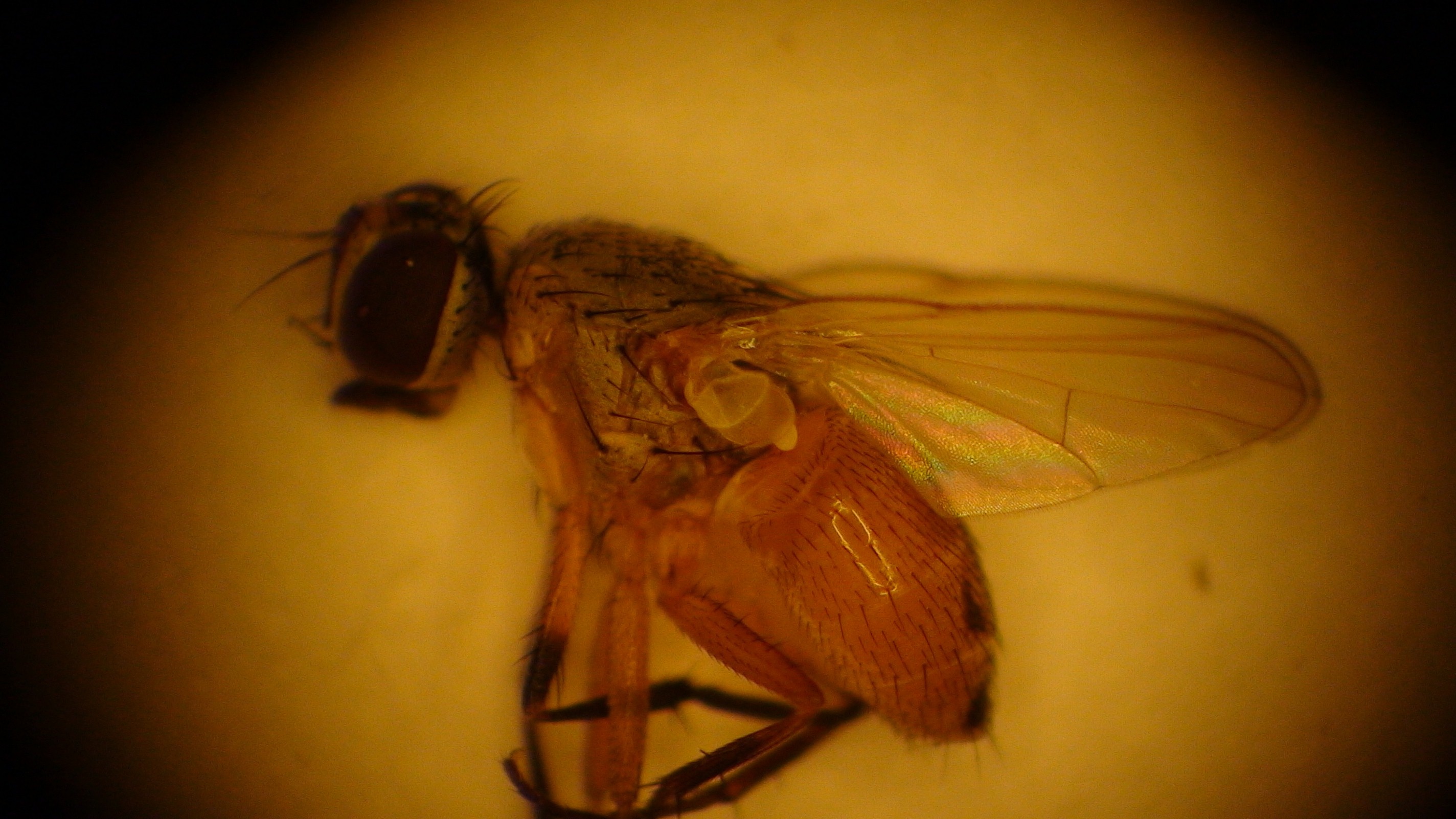
Adult stem maggot fly
Photo Caption: Bermuda grass stem maggot infestation begins when the adult fly lays its eggs on a stem near a node, according to Dr. Allen Knutson, Texas A&M AgriLife Extension Service entomologist, Dallas. (Photo by Dr. Dennis Hancock, University of Georgia forage Extension specialist)

Writer: Robert Burns, 903-834-6191,rd-burns@tamu.edu
OVERTON — The presence of a new Bermuda grass pest has been confirmed in Van Zandt County, and producers are advised to be on the lookout, said Texas A&M AgriLife Extension Service experts.
Unlike other insects that attack plants from the outside, the Bermuda grass stem maggot damages them from inside, according to Dr. Vanessa Corriher-Olson, AgriLife Extension forage specialist, Overton.
“Basically, they consume material inside the stem, unlike armyworms or grasshoppers, where the damage is external,” she said.
Corriher-Olson did her graduate work in Georgia, where the pest has had a presence since 2010, and she is familiar with the damage it does. The Van Zandt field is the first confirmed instance of the pest in Texas.
She said the pest is native to southern Asia, common from Japan to Pakistan. Somehow it made its way to the U.S., where it was found in three Georgia counties.
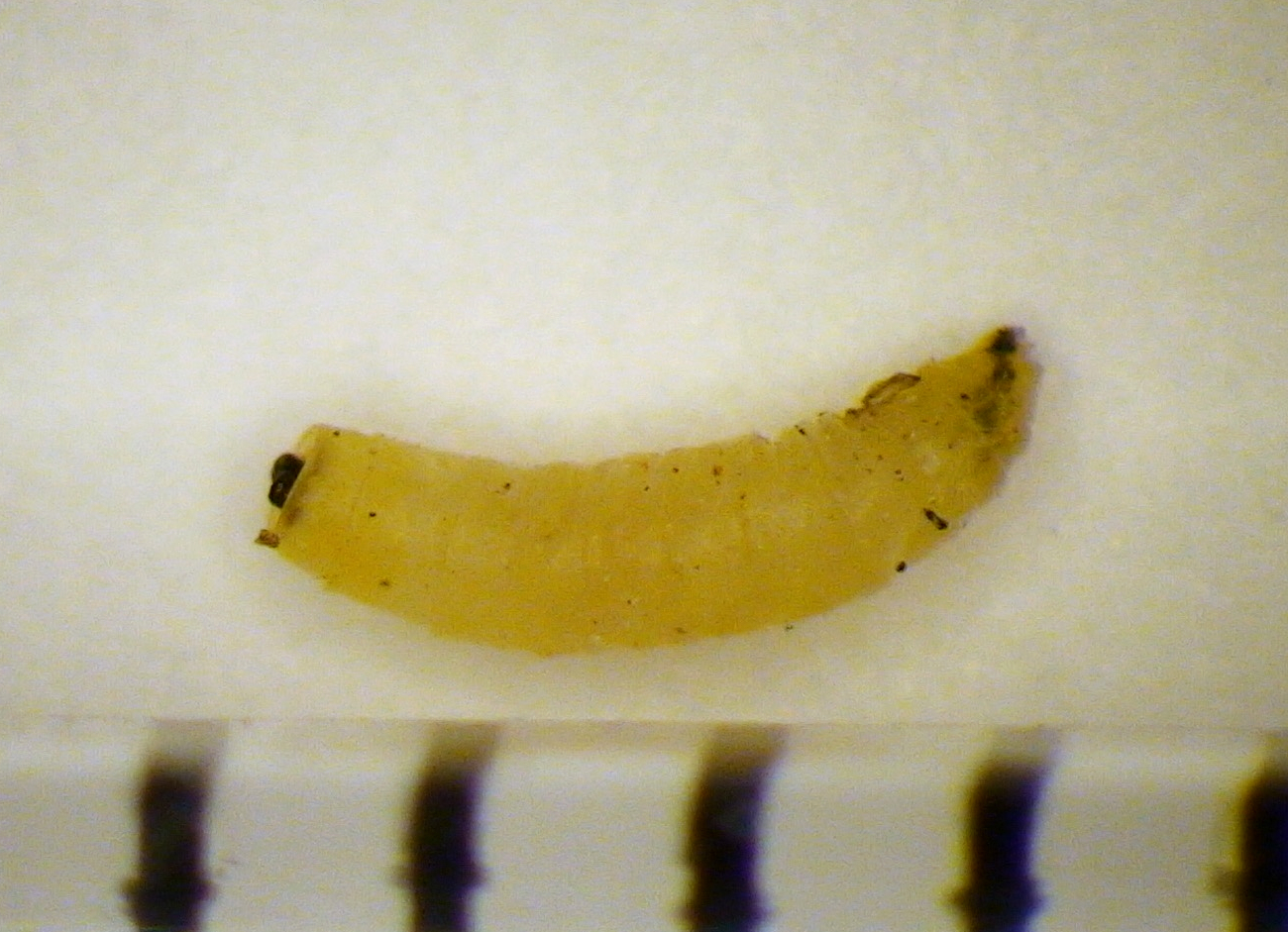
Bermuda grass stem maggot
Bermuda grass stem larvae are yellow and less than an eighth inch long. (Photo by Dr. Dennis Hancock, University of Georgia forage Extension specialist)
“It’s relatively new to the U.S., and very little is known about its life cycle yet,” Corriher-Olson said.
“It is not yet known how damaging this insect will be in Texas,” said Dr. Allen Knutson, the AgriLife Extension entomologist at Dallas who confirmed the identity of larva found in a Van Zandt County field of irrigated Bermuda grass this summer.
What is known is infestation begins when the adult fly lays its eggs on a Bermuda grass stem near a node, Knutson said. The larvae, which grow to be about an eighth-inch long, look like a pale yellow maggot. They burrow into the Bermuda grass shoot to feed. This feeding causes the top two to three leaves to wither and die. Cutting open the stem just below these dead leaves will reveal the maggot and the brownish feeding site on the stem.
The adult flies may go unnoticed; they are small with dark eyes, Knutson said.
The early stages of an infestation may go unnoticed too, Corriher-Olson added.
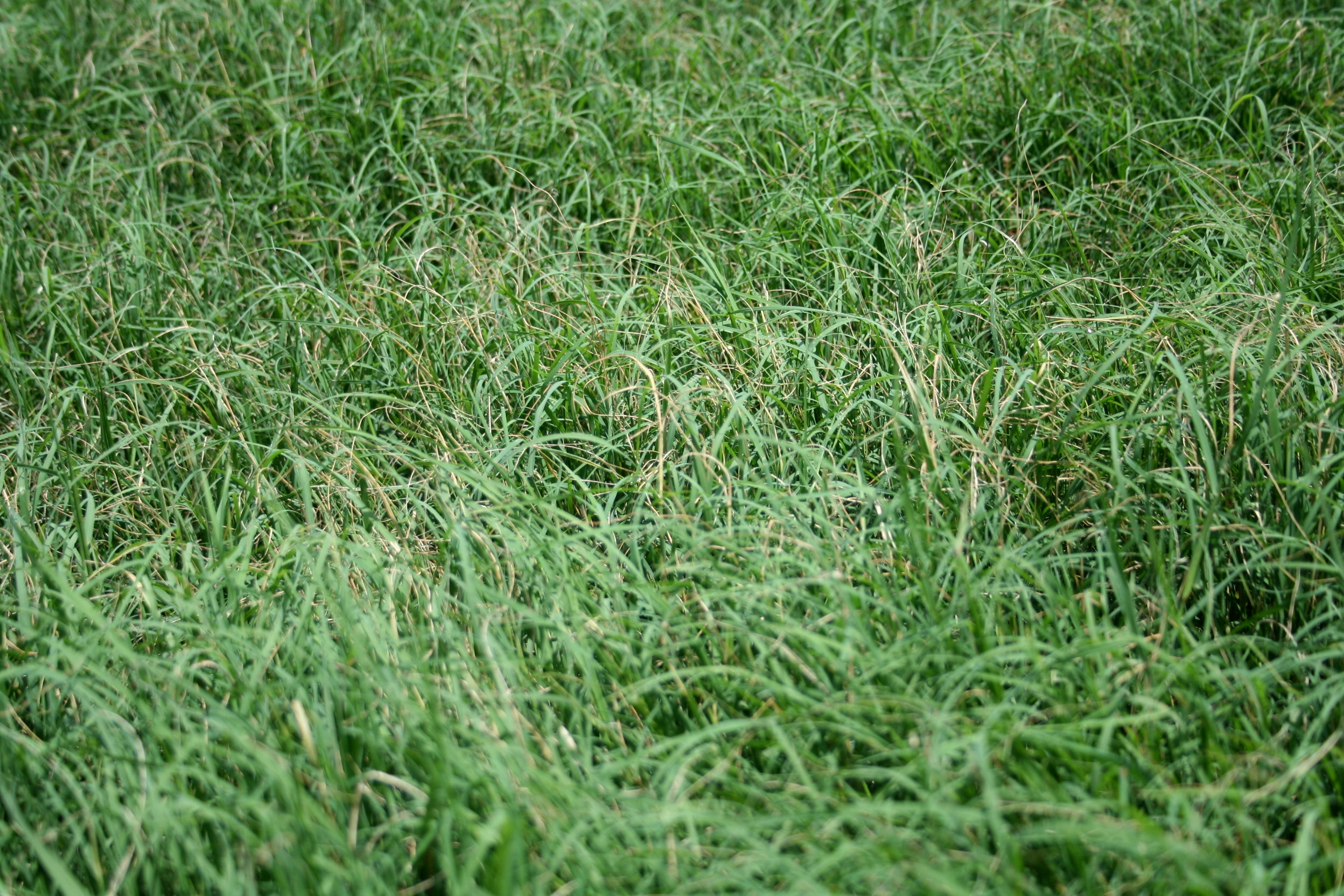
“People are not going to realize they have the pest until they see the damage,” she said. “It looks similar to what you might see from a light frost. Stem tops are whitish or lighter in color than unaffected plants. Only the top parts of the shoots are damaged. The lower leaves on the shoot remain green. The leaves above the feeding site wither and die.”
To further complicate identification, the larva may have already developed into flies and left the plant before their damage is apparent, Corriher-Olson said. And there may be several generations each summer. The fly’s life cycle is usually about three weeks, but it can be as short as 12 days.
Dr. Larry Redmon, AgriLife Extension state forage specialist, College Station, noted unconfirmed reports of the Bermuda grass stem maggot have been coming to his office since last year.
“We had a call from a producer in Waller County during 2012, which was the first one I know of,” he said. “Additionally, we have had a report of what appears to be stem maggot damage in Comanche County this year.”
The amount of yield reduction seems to depend upon growing conditions, Corriher-Olson noted.
Stem maggot damage to Bermuda grass
Photo Cutline: Damage done by the infestation begins when the adult fly lays its eggs stem nodes. The damage looks similar to what one might see from a light frost, according to Dr. Vanessa Corriher-Olson, Texas A&M AgriLife Extension Service forage specialist, Overton.(Photo by Dr. Dennis Hancock, University of Georgia forage Extension specialist)

“Typically, damage is more likely to be found in a hay meadow, not in a grazed field, because the flies won’t have time to complete their life cycle,” she said.
Management strategies depend upon how near the hay crop is to harvest when the damage is identified, Corriher-Olson said.
“If damage is found within one week of harvest, the recommendation from Georgia is to harvest as soon as possible,” she said. “The longer they wait, the more likely the damage will spread, and there will be further reduction in yields.”
If the pest and its damage are confirmed one to three weeks after the previous harvest, the recommendation is to cut the damaged areas, bale the damaged grass, and remove it from the fields, Corriher-Olson said.
“The only threat posed by leaving the hay in the field is that it’ll compete with any attempts of the plant to regrow, therefore decreasing the yield of the next cutting. Leaving the hay in the field does not increase infestation,” she said. “It’s unlikely that the damaged areas will contribute significantly to yields during the next harvest.”
The pest can also be controlled with foliar applications of several inexpensive insecticides, Knutson said. Current recommendations are to treat after a cutting if damage levels are high.
However, economic thresholds for treatment in Texas have not yet been established, he said.
All three AgriLife Extension specialists recommend producers who suspect they have an infestation contact the AgriLife Extension agent in their county to confirm they have the pest before treating or using other control measures.
Contact information for all offices may be found at http://counties.agrilife.org/ .
They may also contact Corriher-Olson at 903-834-6191, vacorriher@ag.tamu.edu“>vacorriher@ag.tamu.edu.
-30-

Friday, August 30, 2013

Water Education Network Now Online

A Water Education Network to help people in Texas learn the  best ways to manage the precious resource has been launched by the Texas A&M AgriLife Extension Service.

The site, http://water.tamu.edu,  provides a “front door” for all of AgriLife Extension’s information on water conservation, water management, irrigation and water quality, which makes it easier to navigate, according to the developers.

The Water Education Network contains information useful for homes, residential and city landscapes, and agricultural and wildlife management. Water-related programs are organized in three main categories: conservation, management and irrigation, and quality. It is organized so that those topics are easy to reach either directly on the site or with search engines. The key is to get important facts and how-to information to the people as easily as possible.”

Viewers of the website can find links to water-related events, classes and trainings offered by AgriLife Extension throughout the state, and can subscribe to receive email updates.

Water conservation topics and publications on the site include: Water Conservation at Home, Youth Water Resources, Conserving Residential Water Through the 40-Gallon Challenge, Landscape Water Conservation using Earth-Kind Landscaping, Water Conservation and Technology Center, and Biological Control of Aquatic Weeds and Saltcedar.

In the water management and irrigation section, viewers will find: Stormwater Management Program, Rainwater Harvesting, The School of Irrigation, Irrigation and Agriculture, Rebuilding the Beef Herd (after Drought), and Managing Ponds and Lakes on Private Lands.

Water quality is addressed with: Protecting Texas Watersheds, Attoyac Bayou and Bacterial Source Tracking, Onsite Waste Water Treatment Systems, Texas Well Owner Network, and Animal Manure and Process Waste Water Management.

Other publications already available are: Home Water Conservation Tips and Checklist, Energy Star Appliances Overview, Home Water Quality Problems – Causes and Treatments, Rainwater Harvesting System Overview and Making a Rain Barrel.

Ranch Management University Scheduled at Texas A&M

New landowners interested in learning to manage their ranch’s resources while protecting the environment can do so during the annual Texas A&M AgriLife Extension Service Ranch Management University on the Texas A&M University campus in College Station.

The workshop is scheduled Oct. 28 through Nov. 1 at the TAMU Beef Center, 7707 Raymond Stotzer Parkway, said Dr. Larry Redmon, AgriLife Extension state forage specialist.  “Applying fertilizer based on soil test recommendations and using pesticides in accordance with the pesticide label are important parts of protecting our environment and valuable water resources,” Redmon said.
“Ranchers are important stewards of our state’s valuable natural resources, and we want to ensure new landowners get off to a good start. We do this with the goal of optimizing economic return while at the same time protecting the environment. This helps with our additional goal of producing safe food products.”

Registration is $500 and attendance is limited to the first 50 people who enroll. Slots will go fast, so he advised those interested to not wait to get registered. To register online and for more information, go to http://agriliferegister.tamu.edu and enter “ranch management” into the search window.
Redmon said the intensive five-day workshop is offered twice a year. This fall session will cover the fundamentals of soils and soil fertility, forage establishment, pasture management and livestock and wildlife management. Grazing management, stocking rate and body condition scoring will be highlighted, and horse and small ruminant management presentations will be conducted.

Additionally, several wildlife management topics are on the program for those interested in managing white-tailed deer, turkey, feral hogs and farm ponds. Various forage species, including Bermuda grass and other introduced forages, native forages, small grains, annual ryegrass and clovers will be studied by workshop attendees.

Approximately one-half the workshop involves lectures and discussion, Redmon said, with the remainder consisting of the field demonstrations.  “Field demonstrations will include learning how to properly calibrate a sprayer, assess body condition scores of cattle, obtain proper soil and hay samples, and to assess the fish populations in ponds,” Redmon said. There will also be a discussion regarding pond weeds and a demonstration on hog-trap design.

Time at the workshop will be allowed for interaction with Texas A&M faculty with expertise and experience in all management facets of the soil-plant-animal interface and wildlife management.
Meals and break refreshments are covered by the registration fee, along with a resource CD containing more than 100 publications covering ranch resource management.
For additional information, contact Redmon at 979-845-4826 or l-redmon@tamu.edu .

Friday, August 23, 2013

FALL EXPO SCHEDULED


HUNT COUNTY HAY SHOW ENTRIES


            Entries are currently being accepted for the annual Hunt County Hay Show. Many factors have affected hay production the past several years, including rainfall, and rising costs of fertilizer and fuel. What better time to take advantage of a free analysis of your hay, to find out the quality of what you have produced.
           Having an analysis of your hay sample can allow you to feed livestock much more efficiently, supplementing only what your livestock need during the winter feeding season.
            Entries are due by 5 p.m., Wednesday, September 4, for the show. We hope you are making plans to enter, and will get your samples delivered.
            Entering the show is simple. Producers must take any entries to a drop location, complete an entry form, and you are done. The Extension Office and members of the Ag and Livestock Committee will pick the samples up, have them tested for crude protein, TDN and ADF, and get them ready for the show. It is important to note that entering is free. The fee for testing is provided by the Noble Foundation, and is normally worth $15 per sample.
The following locations will accept entries: NET Farmers Co-op (both the store and fertilizer plant) in Greenville, and Huffman Farm Supply in Commerce.
            We ONLY require a feed sack full of hay to constitute an entry. Samples filling a 50 pound paper feed sack, are all we will accept. We still need plenty of hay for testing and preparing entries for the county show, so for your entry sample, you may put 2-3 blocks from a square bale or a sample from the center of a large round bale to fill the feed sack. Please do not use plastic bags, as they cause the sample to mold before the show, and could cause disqualification.
            Classes include legumes and legume (clover) grass mixes; forage sorghum, sudans, hybrid sudan, and johnson grass; bermudas; small grains and winter annuals; and other, which includes prairie, grass mixes, etc.
Hay will be judged on protein score, and acid detergent fiber (ADF). Entries will not be accepted that have injurious foreign material, hardware, or are moldy, caked, dusty, or badly weathered.
            The actual Hay Show and meal will be held on October 3, 2013 at the Fletcher Warren Civic Center in Greenville.  Hay show winners will be announced that same evening. Tickets, will be available at the drop off locations and the County Extension Office, and are $10 per person, and are required to ensure a meal at the show.
            We hope you will get your entries in for the show. Remember, there is no entry fee, and it is open to all Hunt County producers. Also, if you are worried that your hay may not be competitive, give the show a try anyway. Only blue ribbon hay will be identified as to the producer, but you may be surprised, and find you have better hay than expected. You will also take home lots of information about the quality of your hay when feeding it to livestock.
            If you would like any further information, please contact the Hunt County Extension Office at (903)455-9885, and we will be glad to discuss details of the hay show with you. Hay show rules and entry forms follow for your use.